
Carpal Tunnel Syndrome
Jacksonville, FL
That numbness in your fingers at night — the hand you have to shake awake — is one of the most common and most treatable conditions in hand surgery. R. David Graham, MD, a fellowship-trained hand and upper extremity surgeon, offers expert evaluation and surgical treatment for carpal tunnel syndrome at Jacksonville Beach, serving patients throughout the greater Jacksonville area.


- Numbness or tingling in the thumb, index, and middle fingers
- Waking at night to shake the hand "awake"
- Symptoms when holding a phone, steering wheel, or book
- Weakness or dropping objects — especially keys or cups
- Electric or burning sensation from wrist into the hand
- Aching discomfort running up the forearm
- Loss of fine motor control or grip strength
Symptoms are typically worse at night and during activities that flex or extend the wrist. If you recognize these, an evaluation with Dr. Graham can confirm the diagnosis — often beginning with a clinical exam and a targeted injection before any additional testing.
- Numbness in the thumb, index, and middle fingers — the small finger is spared
- Waking at night to shake the hand awake is the classic pattern
- A diagnostic injection can confirm the diagnosis and relieve symptoms at the same time
- EMG is not always required — it grades severity when the picture is unclear
- Release is mini-open under local anesthesia — no IV, home the same day
- Constant numbness or thinning at the base of the thumb means don’t wait
Understanding the Condition
What Is Carpal Tunnel Syndrome?
The carpal tunnel is a narrow passageway on the palm side of your wrist, formed by bones and a stiff ligament called the transverse carpal ligament. Running through it are nine flexor tendons and the median nerve — the nerve responsible for sensation in your thumb, index, middle, and part of your ring finger, as well as the muscle control that lets your thumb pinch and grip.
When the space inside the tunnel becomes too tight — from swelling, inflammation, anatomical variation, or repetitive loading — the median nerve gets compressed. Compressed nerves do what compressed nerves do: they fire abnormally. That's the tingling. They conduct poorly. That's the numbness. Over time, if left untreated, the nerve can lose function permanently, resulting in weakness and wasting of the muscles at the base of the thumb (the thenar eminence).
Carpal tunnel syndrome is the most common peripheral nerve compression condition in the upper extremity. It affects approximately 3–6% of adults, is more common in women, and becomes more frequent with age — though it can occur at any age, including in younger people with certain occupations or medical conditions.
The good news: it is also one of the most reliably treatable conditions in hand surgery. When addressed at the right time — before permanent nerve damage occurs — outcomes are excellent.

Several factors can increase pressure inside the carpal tunnel: tenosynovitis (inflammation of the tendon sheaths), fluid retention from pregnancy or thyroid disease, anatomical variations in wrist shape, diabetes, rheumatoid arthritis, and prolonged or repetitive wrist positioning at work. In many patients, no single cause is identified — the tunnel is simply too narrow for the structures inside it.
What matters most for treatment planning is the severity and pattern of the nerve compression. In many patients, carpal tunnel syndrome can be diagnosed clinically; nerve conduction studies and EMG are particularly useful when symptoms are atypical, the diagnosis is uncertain, or objective information about nerve function would affect treatment.
Recognizing the Problem
Symptoms of Carpal Tunnel Syndrome
CTS has a characteristic pattern that experienced hand surgeons recognize immediately — but the presentation can vary based on severity and duration.
Nighttime Numbness
The classic presentation: waking in the middle of the night with a numb, tingling, or "asleep" hand. Patients instinctively shake or dangle their hand to restore feeling. The wrist naturally flexes during sleep, compressing the tunnel.
Symptoms with Sustained Grip
Holding a phone, steering wheel, book, or coffee cup triggers tingling or pain. Any position that maintains wrist flexion or extension for a sustained period can provoke symptoms.
Tingling & Electric Sensation
A burning, electric, or "pins and needles" sensation in the thumb, index, and middle fingers — following the distribution of the median nerve. The small finger (pinky) is typically spared.
Weakness & Dropping Things
As compression progresses, pinch and grip strength diminish. Patients report dropping keys, cups, or tools unexpectedly. This reflects involvement of the thenar muscles — the group at the base of the thumb controlled by the median nerve.
Thenar Muscle Wasting
In advanced or long-standing cases, the fleshy pad at the base of the thumb visibly flattens. This is thenar atrophy — muscle wasting from prolonged nerve compression. It signals that permanent damage may occur without surgical intervention.
Forearm Aching
Many patients experience a deep aching up the forearm, especially after prolonged use. This can be confusing and lead to misdiagnosis as tennis elbow or neck pathology — which is why a careful examination — and selective electrodiagnostic testing when needed — matters.
When to Stop Waiting and Call
Persistent symptoms for more than a few weeks, any weakness or clumsiness in the hand, thenar muscle flattening, or constant (not just intermittent) numbness are all signals that you should be evaluated promptly. Nerve damage from prolonged compression can be permanent. Early treatment produces the best outcomes.
Getting a Diagnosis
How Carpal Tunnel
Is Diagnosed
Diagnosis starts with your history and a physical examination. Dr. Graham will assess the pattern and timing of your symptoms, check sensation in each finger individually, and test grip and pinch strength.
Two provocative tests are part of every exam. Tinel’s sign is tapping over the median nerve at the wrist to see whether it reproduces tingling in the thumb, index, middle and ring fingers. Phalen’s test holds the wrist flexed for sixty seconds to see whether the symptoms come on.
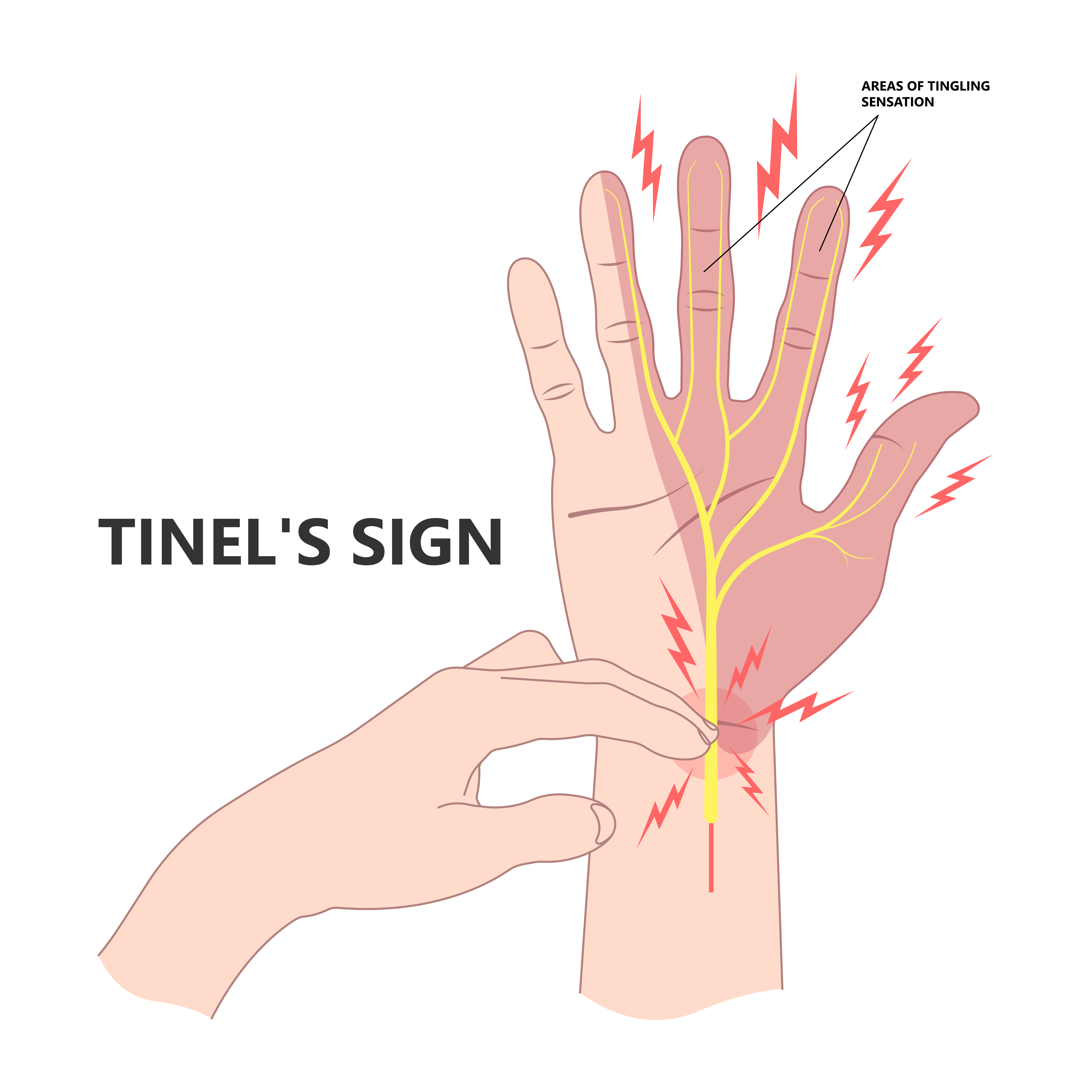
In many cases, the clinical picture is clear enough to proceed directly to treatment without waiting for further testing.
Diagnostic and therapeutic carpal tunnel injection plays a central role in Dr. Graham's approach. A corticosteroid injection into the carpal tunnel serves two purposes at once: it reduces inflammation around the median nerve (providing relief), and a meaningful response provides additional support for the diagnosis while also providing therapeutic relief. For many patients, this is both the most efficient and most patient-friendly path to an accurate diagnosis.
Nerve Conduction Study (NCS) / Electromyography (EMG) provides objective electrodiagnostic data — measuring how fast and how well the median nerve conducts signals across the wrist. This is useful for grading severity, distinguishing carpal tunnel syndrome from other conditions such as cervical radiculopathy or cubital tunnel syndrome, and guiding treatment decisions when the clinical picture is uncertain. It is not always required before proceeding with treatment.
Imaging (X-ray or MRI) is not routinely needed to diagnose carpal tunnel syndrome, though X-rays may be obtained if other wrist pathology is suspected.
Scroll to see the full table
| Severity | NCS / EMG Findings | Typical Symptoms | Treatment Direction |
|---|---|---|---|
| Mild | Mildly slowed conduction velocity | Intermittent tingling, mainly nocturnal | Splinting, activity modification, possible injection |
| Moderate | Moderately slowed; latency prolonged | Frequent numbness, some weakness, daytime symptoms | Injection trial; surgery if symptoms persist or progress |
| Severe | Absent or severely degraded conduction; denervation on EMG | Constant numbness, thenar wasting, significant weakness | Surgery recommended — nerve recovery depends on prompt intervention |
Conservative Options First
Non-Surgical Treatment
For mild to moderate carpal tunnel syndrome, non-surgical approaches often provide meaningful relief — and are always worth a trial before considering surgery.
Wrist Splinting
A neutral-position wrist splint worn at night keeps the wrist from flexing during sleep — the position that most compresses the carpal tunnel. Many patients experience significant symptom relief within weeks. Daytime splinting during aggravating activities can also help.
Activity Modification
Identifying and reducing activities that provoke symptoms — sustained wrist flexion, repetitive gripping, vibrating tools — can relieve pressure on the median nerve. Ergonomic adjustments to workstation setup are often beneficial.
Corticosteroid Injection
A corticosteroid injection into the carpal tunnel can reduce inflammation, provide symptom relief, and — when the response is meaningful — help confirm the diagnosis. It is an option for appropriate patients, but not always indicated. When nerve conduction studies or EMG show significant nerve compression or damage, moving directly to surgery is often the better choice rather than delaying with an injection that is unlikely to provide lasting benefit.
Surgical Treatment
Carpal Tunnel Release
Carpal tunnel release is one of the most common and most successful operations in all of hand surgery. The goal is simple: divide the transverse carpal ligament to relieve pressure on the median nerve.
Dr. Graham performs carpal tunnel release as a mini-open procedure — a small, precise incision at the base of the palm — under local anesthesia at Baptist Beaches Hospital or Jacksonville Beach Surgery Center. A small incision in the palm allows direct, clear visualization of the median nerve and complete release of the transverse carpal ligament.
Local anesthesia means no IV sedation is required — patients are awake, comfortable, and coherent throughout. Sedation is available for those who prefer it, but most patients find the experience straightforward without it. Long-term patient-reported outcomes are similar to endoscopic release, and open surgery avoids the equipment surcharge associated with the endoscope — making it the more cost-effective choice for patients.
- Local anesthesia — no IV, no general anesthesia required
- Direct visualization of the nerve — nothing obscured
- No endoscope equipment fee, which may lower out-of-pocket cost depending on the facility and insurance arrangement
- Outpatient — home the same day
- Long-term patient-reported outcomes are similar to endoscopic technique
- Sedation available on request
Endoscopic carpal tunnel release uses a small camera inserted through a wrist-crease incision to visualize and divide the transverse carpal ligament. Dr. Graham does not perform endoscopic release — he performs mini-open release. Long-term patient-reported outcomes are similar: both approaches fully decompress the median nerve and produce the same durable result.
Endoscopic technique is offered by other surgeons and is a valid option. If a patient specifically requests it, Dr. Graham will refer appropriately. His preference for mini-open is based on direct visualization, confirmed complete release of the transverse carpal ligament, and equivalent recovery — not a meaningful clinical advantage of one technique over the other.
- Equivalent long-term nerve decompression — same clinical outcome
- Single wrist-crease incision (vs. palm incision with mini-open)
- Slightly faster early grip recovery in some studies — not consistent
- Endoscopic equipment may add cost depending on the facility and insurance arrangement
- Also outpatient — home the same day
What Happens During Surgery
Anesthesia — No IV, No General Anesthesia
A local anesthetic injection numbs the hand and wrist. That's it. No IV line. No general anesthesia. No anesthesiologist in the room. No nerve block. You are awake and comfortable throughout — most patients are surprised by how straightforward the experience is. This approach also means a faster, simpler recovery with none of the grogginess or nausea that can follow general anesthesia. Sedation is available for patients who prefer it; simply let the team know in advance. The procedure takes approximately 20–30 minutes.
Ligament Release
The transverse carpal ligament is divided along its entire length, immediately enlarging the carpal tunnel and relieving pressure on the median nerve. For the endoscopic approach, this is done under camera visualization through the wrist-crease incision.
Closure & Dressing
The incision is closed with a small number of sutures. A soft dressing is applied — not a cast. Fingers are free to move immediately. Most patients can use the hand for light activity within days.
Recovery & Discharge
You go home the same day. Most patients are surprised by how manageable the early recovery is. Sutures are removed at 10–14 days. Dr. Graham or John Tierney, PA-C will contact you after the procedure to check in.
What to Expect
Recovery After Carpal Tunnel Release
Most patients are surprised by how quickly they recover. Here is a typical timeline — individual experiences vary based on severity, duration of symptoms before surgery, and which approach was used.
Home the Same Day
Surgery is outpatient. You go home with a soft dressing. Fingers are free to move. Mild discomfort managed with over-the-counter pain medication in most cases. Keep the hand elevated above heart level to minimize swelling. Dr. Graham's team will check in with you.
wks
Light Use, Keep It Dry
Light finger and hand activity is permitted and encouraged immediately. Keep the incision dry until sutures are removed at 10–14 days. Avoid heavy lifting, gripping, or submerging the hand. Nighttime symptoms — tingling, waking — often begin to improve within days of surgery.
wks
Increasing Activity
Incision healed. Returning to most daily activities. Some palm tenderness or sensitivity at the incision site is normal — this is "pillar pain," a well-known part of carpal tunnel recovery. Light work may be possible. Grip and pinch strength beginning to rebuild.
wks
Most Patients Back to Normal
Grip strength returning toward normal. Most patients are performing their regular daily and work activities. Incision scar maturing and becoming less sensitive. Numbness and tingling — if not already resolved — continuing to improve as the nerve recovers.
mos
Full Nerve Recovery
Sensation can continue to improve over several months after surgery. Severe cases can take 6–12 months, and a very severe, longstanding neuropathy may never regain completely normal sensation. Strength and function continue improving over the following months. Recovery is generally faster in mild disease and slower — and sometimes incomplete — when significant nerve damage was present before surgery. Recurrence is uncommon.
Patient Experiences
In Their Own Words
“Dr. Graham performed a bilateral carpal tunnel surgery on my hands and I immediately had relief. Great bedside manner and I could not be more pleased. I highly recommend.”
“Dr. Graham did an excellent job removing a plate in my wrist and doing a Carpal tunnel release. His bedside humor and surgical skills are just what I needed!!”
“I waited for years to get my carpal tunnel release, Dr Graham was my primary care doctors recommendation. Dr Graham was easy to talk to, he explained everything and put me at ease. I was awake for the surgery and it took about six minutes to complete.”
Why Dr. Graham
A Specialist — Not a
General Orthopaedic Surgeon
Treating Everything
Carpal tunnel release is a common procedure, but not all surgeons who perform it specialize in hand surgery. Dr. Graham completed a dedicated fellowship in Hand, Upper Extremity & Microvascular Surgery — meaning his entire surgical career is focused on conditions of the hand, wrist, elbow, and shoulder. Carpal tunnel syndrome, in all its presentations, is his daily work.
That matters most in complex or atypical cases — recurrent symptoms, bilateral disease, workers with demanding manual occupations, or patients with co-existing conditions like diabetes, rheumatoid arthritis, or prior wrist fractures that alter the anatomy.
Patients come to Dr. Graham's Jacksonville Beach office from throughout Northeast Florida — from Ponte Vedra and St. Johns County, from Atlantic Beach, Neptune Beach, and Fernandina Beach, and from across the greater Jacksonville area. Many have already tried conservative treatment elsewhere and are looking for a clear answer on whether surgery is the right next step.
"Dr. Graham did an excellent job removing a plate in my wrist and doing a Carpal tunnel release. His bedside humor and surgical skills are just what I needed!!"
Sharon Doyle · Verified Google Review · Carpal Tunnel Release · ★ 5/5
Common Questions
Frequently Asked Questions
Next Steps
Ready to Stop
Losing Sleep Over Your Hand?
Carpal tunnel syndrome is highly treatable — but the right time to act is before the nerve sustains permanent damage. Dr. Graham's office can typically see new patients promptly. Walk-in availability through JOI Now makes same-day evaluation possible Monday–Friday.
Jacksonville Beach, FL 32250
Surgery days: Mon · Thu
Walk-in access available through JOI Now, Monday–Friday — no appointment needed for urgent concerns. Ask about availability when you call.
Clinical References
- American Academy of Orthopaedic Surgeons. Clinical Practice Guideline for the Management of Carpal Tunnel Syndrome. AAOS; 2024. aaos.org
- American Academy of Orthopaedic Surgeons. CTS-6 Diagnostic Tool — OrthoGuidelines Infographic. AAOS; 2024. aaos.org
- American Society for Surgery of the Hand. Carpal Tunnel Syndrome — Patient Education. ASSH; 2023. assh.org
- American Academy of Orthopaedic Surgeons. Carpal Tunnel Syndrome — OrthoInfo Patient Guide. AAOS; updated 2022. orthoinfo.org
- Huisstede BM, et al. Carpal tunnel syndrome. Part II: effectiveness of surgical treatments — a systematic review. Arch Phys Med Rehabil. 2010;91(7):1005–1024.
Medically reviewed by R. David Graham, MD · Reviewed 17 August 2026 · Board-Certified Orthopaedic Surgeon · Fellowship-Trained Hand & Upper Extremity Surgeon · Physician biography