Elbow Arthroplasty
Jacksonville, FL
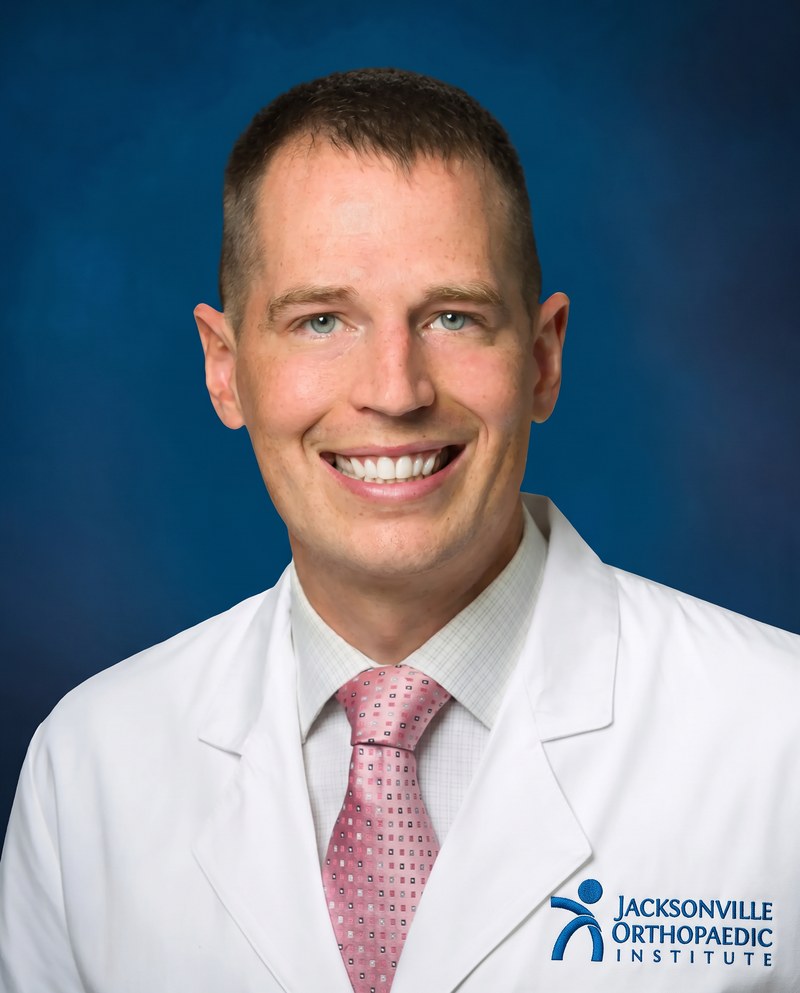
When the elbow joint fails — from arthritis, trauma, or prior surgery — total elbow arthroplasty can restore function and eliminate pain. R. David Graham, MD is a fellowship-trained upper extremity surgeon performing total elbow replacement for both trauma and arthritis indications, with linked and unlinked implants, and accepting revision cases from across the region.


Understanding the Procedure
When the Elbow Joint
Cannot Be Saved
The elbow is a complex hinge-and-rotation joint that allows the arm to bend and the forearm to rotate. It depends on three articulations — the humeroulnar, humeroradial, and proximal radioulnar joints — working together with an intricate system of ligaments and muscles. When any of these components fail due to severe arthritis, trauma, or prior surgery, the result is pain, stiffness, instability, and loss of arm function.
Total elbow arthroplasty (TEA) replaces the damaged surfaces of the distal humerus and proximal ulna with prosthetic components, restoring a functional, pain-free arc of motion. Unlike hip and knee replacement — which are primarily elective procedures for degenerative arthritis — elbow replacement serves two distinct patient populations: those with end-stage arthritis and those with acute or chronic trauma for whom reconstruction with fixation is not feasible.
Total elbow replacement is a technically demanding operation. The elbow's anatomy is intricate, the soft tissue envelope is thin, and the implant sits close to major neurovascular structures. Subspecialty training and experience matter more here than in almost any other joint replacement.
The distal humerus and proximal ulna are the primary joint surfaces replaced in total elbow arthroplasty. The ulnar nerve runs immediately behind the medial epicondyle and must be carefully identified and protected during surgery — one of the most technically demanding aspects of the procedure.
The red zone in the diagram illustrates the arthritic or traumatically destroyed joint space that arthroplasty addresses. Both trauma and inflammatory disease can reach this point of irreversibility.
Two Distinct Indications
Trauma & Arthritis — Both Lead Here
Total elbow arthroplasty serves two patient populations with different stories but the same destination: a joint that cannot be preserved or reliably reconstructed any other way.
In elderly patients with osteoporotic bone, severely comminuted distal humerus fractures are sometimes not reliably fixable with plates and screws. The bone is too fragile to hold hardware, the fracture is too complex to reconstruct anatomically, or the patient cannot tolerate the prolonged immobilization that failed fixation would require. In these situations, total elbow arthroplasty provides immediate structural stability and allows early motion — often the better outcome in older, lower-demand patients.
Beyond acute trauma, the elbow is also a destination for patients with long-standing post-traumatic arthritis — pain and stiffness that developed years after a prior fracture or dislocation — and for those whose prior fixation failed and left them with a painful, dysfunctional joint.
- Severely comminuted distal humerus fractures in elderly / osteoporotic patients
- Distal humerus fracture nonunion — failed to heal after prior surgery
- Post-traumatic elbow arthritis after old fracture or dislocation
- Failed prior ORIF with hardware failure or nonunion
- Complex fracture-dislocations where reconstruction is not viable
Rheumatoid arthritis is the most common inflammatory cause of end-stage elbow destruction — the synovitis progressively erodes cartilage, collapses the joint, and damages the supporting ligaments. When conservative management and joint-preserving procedures have been exhausted, total elbow arthroplasty is the most reliable way to eliminate pain and restore a functional range of motion.
Primary osteoarthritis of the elbow — more common in men and often associated with heavy physical labor or prior injury — produces a different pattern of destruction, typically with osteophytes, loose bodies, and progressive stiffness. In advanced cases where the joint surface is severely compromised, arthroplasty is appropriate even when inflammatory disease is not the cause.
- Rheumatoid arthritis — the most common indication for TEA globally
- Primary osteoarthritis with end-stage joint destruction
- Psoriatic arthritis and other inflammatory arthropathies
- Crystalline arthropathy (gout, CPPD) with severe joint damage
- Avascular necrosis of the distal humerus
- Failed prior elbow surgery — synovectomy, debridement, loose body removal
Full Spectrum of Indications
Who Is a Candidate for Elbow Replacement
Dr. Graham treats all indications for total elbow arthroplasty. The common thread is a joint that cannot be reliably restored by any other means.
Distal Humerus Fracture
Severely comminuted or osteoporotic distal humerus fractures in elderly patients where open reduction and internal fixation carries high risk of failure. TEA provides immediate stability and allows early elbow motion, reducing the risks of prolonged immobilization in an older population.
Fracture Nonunion & Malunion
Prior distal humerus fracture that failed to heal or healed in malalignment, leaving a painful, dysfunctional elbow. When the articular surface is compromised and reconstruction is not feasible, arthroplasty is the appropriate salvage procedure.
Failed Prior Elbow Surgery
Painful elbow following prior ORIF with hardware failure, infection, or progressive joint destruction. Revision to total elbow arthroplasty is technically demanding — requiring explantation of prior hardware, bone loss management, and meticulous soft tissue handling. Dr. Graham accepts these cases.
Rheumatoid Arthritis
The most common inflammatory indication for TEA. RA-related elbow destruction includes cartilage loss, ligament attrition, and often significant bone erosion. Linked implants are typically required given the ligamentous compromise. TEA dramatically improves pain and function in RA patients.
Primary Osteoarthritis
End-stage degenerative arthritis of the elbow — particularly in men with histories of heavy manual labor or prior elbow trauma. When osteophyte debridement and joint-preserving procedures have failed and the joint surface is severely destroyed, arthroplasty is appropriate.
Inflammatory & Crystalline Arthropathy
Psoriatic arthritis, gout, calcium pyrophosphate deposition disease, and other inflammatory conditions that produce destructive elbow arthritis. Surgical timing accounts for systemic disease activity and immunosuppression status in coordination with rheumatology.
Implant Selection
Linked vs. Unlinked Implants
Dr. Graham performs both linked and unlinked total elbow arthroplasty. The choice depends on ligament integrity, bone quality, fracture pattern, and individual anatomy — determined at the time of consultation and confirmed intraoperatively.
A linked elbow replacement mechanically connects the humeral and ulnar components with a loose hinge mechanism. The coupling provides intrinsic stability independent of the patient's own ligaments — making it the preferred choice when ligaments are damaged, absent, or unreliable.
Because stability does not depend on the soft tissue envelope, linked implants are particularly well-suited for trauma cases (where collateral ligaments may be disrupted), inflammatory arthritis (where ligaments are often attenuated), and revision surgery (where prior dissection has altered the soft tissue anatomy).
- Intrinsic stability — does not rely on ligament integrity
- Preferred for trauma, RA, revision cases
- Loose hinge allows 5–7° of varus/valgus laxity — reduces stress at implant-bone interface
- Most commonly used implant type in Dr. Graham's practice
- 5-lb repetitive / 10-lb single-effort lifting restriction for life of implant
An unlinked elbow replacement does not mechanically couple the humeral and ulnar components — stability depends on the patient's own collateral ligaments and soft tissue envelope. This design preserves more bone and transmits stress to the soft tissues rather than the implant-bone interface, potentially offering better long-term durability in younger, lower-demand patients with intact ligamentous anatomy.
Unlinked implants require intact, functioning collateral ligaments — making them appropriate primarily for patients with primary osteoarthritis or selected arthritis cases where the ligaments are well-preserved. They are not suitable when ligament integrity is compromised.
- Relies on intact collateral ligaments for stability
- Preserves more bone stock than linked designs
- May offer longer durability in appropriate candidates
- Selected for primary OA with intact ligamentous anatomy
- Same 5-lb / 10-lb lifting restriction applies
The Lifetime Lifting Restriction — An Honest Conversation
Total elbow replacement comes with a permanent activity modification: patients are advised to limit repetitive lifting to approximately 5 pounds and avoid single-effort lifts exceeding 10 pounds for the life of the implant. This is not a temporary post-operative restriction — it is a permanent lifestyle consideration designed to protect the implant-bone interface and reduce the risk of loosening or periprosthetic fracture over time.
Dr. Graham discusses this candidly at every consultation. For most patients seeking elbow arthroplasty — particularly those with inflammatory arthritis or fracture — the trade-off is clearly worthwhile: the pain relief and functional restoration of TEA dramatically outweigh the weight restriction. For patients with high physical demand occupations or activity goals, the restriction and alternative procedures are discussed in detail before any decision is made.
The Procedure
What Happens During Surgery
Total elbow arthroplasty is performed at Baptist Beaches Hospital. Here is what the operative experience looks like from arrival to discharge.
Anesthesia
Total elbow arthroplasty is performed under general anesthesia or regional block with sedation — the approach is determined based on patient health, preference, and anesthesia team assessment. The patient is positioned prone or lateral with the arm draped free. The procedure typically takes 90–150 minutes depending on complexity, prior surgery, and implant type.
Ulnar Nerve Identification & Protection
Before the joint is exposed, the ulnar nerve is carefully identified at the medial epicondyle and mobilized to protect it throughout the case. Ulnar nerve management is one of the most technically demanding and consequential aspects of elbow arthroplasty. Dr. Graham identifies and protects the nerve with every case.
Joint Exposure & Preparation
A posterior approach to the elbow provides access to both the distal humerus and the proximal ulna. The triceps is managed in a way that allows early motion after surgery. In trauma cases, fracture fragments are cleared and the joint is prepared for implant placement. In arthritis cases, remaining cartilage and osteophytes are removed and the bone is prepared to receive the prosthetic components.
Component Implantation
The humeral and ulnar components are implanted using bone cement, which bonds the prosthesis to the prepared bone surfaces. In linked designs, the components are coupled through the hinge mechanism. Fluoroscopy and direct visualization confirm implant position, alignment, and stability before closure. The radial head is addressed as needed based on arthritis involvement and stability requirements.
Closure & Splinting
The triceps is repaired and the wound is closed in layers. A posterior splint is applied with the elbow in extension for the first 24–48 hours to protect the soft tissue repair. A short hospital stay is typically required — most patients go home on day one or two. Active elbow motion begins within days of surgery under the guidance of the hand therapy team.
Recovery
What to Expect After Total Elbow Replacement
Recovery from TEA follows a predictable progression. Most patients are surprised by how quickly elbow motion returns — and how significantly pain improves even in the first weeks.
Pain Management & Early Motion
Most patients stay one to two nights. Pain is managed with a multimodal regimen. The splint comes off within 24–48 hours and gentle active elbow flexion and extension begin — early motion is essential to prevent stiffness and protect the triceps repair. Occupational therapy begins in the hospital.
wks
Wound Healing & Nerve Check
Sutures removed at 10–14 days. Ulnar nerve function is assessed at the first post-operative visit. Most patients notice meaningful pain improvement compared to before surgery. Elbow motion continues to improve with daily exercises. The arm is kept elevated when resting to reduce swelling.
wks
Motion & Light Function
Formal hand therapy with progressive range-of-motion exercises. Most patients achieve a functional arc of motion — approximately 30–130° of flexion — during this phase, which is sufficient for the majority of daily activities. Light functional tasks are permitted within the 5-lb limit. Driving typically resumes by 6 weeks when the dominant arm is involved.
wks
Strengthening & Functional Independence
Progressive strengthening within the permanent weight restriction. Most patients are performing the majority of daily activities independently. Return to work in non-manual occupations is typically possible. Triceps strength continues to recover during this phase.
mos
Full Functional Result
Final motion and strength established. Most patients describe excellent pain relief and meaningful functional recovery. The 5-lb repetitive / 10-lb single-effort lifting restriction is permanent and maintained going forward to protect implant longevity. Annual follow-up is recommended to monitor the implant over time.
Revision Surgery
When a Total Elbow
Needs to Be Revised
Total elbow arthroplasty has a higher revision rate than hip or knee replacement — this is not a secret, and Dr. Graham discusses it openly at every consultation. The elbow is a smaller, more mechanically demanding joint, the implant operates in a thin soft-tissue envelope, and the weight restriction matters over time. Revision is a reality for some patients.
When revision is needed — whether for loosening, infection, instability, periprosthetic fracture, or component failure — it requires a surgeon with experience in complex elbow reconstruction. Dr. Graham accepts revision total elbow arthroplasty referrals from across the region. Patients who had their primary TEA performed elsewhere are welcome to seek evaluation here.
Revision elbow arthroplasty is among the most technically demanding procedures in upper extremity surgery — requiring implant explantation, bone loss management, soft tissue reconstruction, and reimplantation into a compromised environment. Subspecialty experience and meticulous technique are essential.
Implant Loosening
The most common long-term complication. Progressive loosening of the humeral or ulnar component causes pain and instability. Revision involves explantation, bone loss assessment, and reimplantation with longer-stem revision components.
Periprosthetic Infection
Infection after total elbow arthroplasty requires staged treatment — explantation, antibiotic spacer placement, systemic antibiotic therapy, and eventual reimplantation once infection is eradicated. Dr. Graham manages these complex two-stage revision cases.
Periprosthetic Fracture
Fractures around elbow implants can occur with low-energy trauma, particularly in osteoporotic bone. Treatment depends on fracture pattern, implant stability, and bone quality — options include fixation, component revision, or combined approaches.
Instability & Component Failure
Hinge bushing wear, component dissociation, or ligamentous failure can cause instability after linked or unlinked TEA. Revision addresses the mechanical cause and restores stability through component exchange or soft tissue reconstruction.
Second Opinions Welcome
Patients with a prior total elbow replacement experiencing new symptoms — pain, instability, clicking, reduced motion — or those facing a recommended revision are welcome to schedule a consultation for an independent assessment.
Why This Practice
The Right Experience
in the Room — for the
Most Demanding Procedure
Total elbow arthroplasty is one of the most technically demanding operations in orthopaedic surgery. The anatomy is unforgiving — the ulnar nerve runs immediately behind the medial epicondyle, the soft tissue envelope is thin, and the implant tolerates less mechanical error than hip or knee replacement. Subspecialty experience and technique matter here more than in almost any other joint replacement.
Dr. Graham performs total elbow replacement with both linked and unlinked implants for trauma and arthritis indications, and accepts revision cases that other surgeons refer out. He consults for orthopaedic industry companies, providing patients access to current-generation implant systems as evidence supports their use.
This is not a procedure he does occasionally. It is a core part of his upper extremity practice — and the depth of that experience is the most important thing a patient considering elbow replacement should ask their surgeon about.
Patient Experiences
In Their Own Words
“Dr Graham performed an elbow replacement in October 2025, with wonderful results, pain relief! He has great bedside manner. I would highly recommend Dr Graham!”
“Dr Graham is both professional and personable. He answers all questions and takes whatever time is necessary”
Common Questions